





Business, Feature, Forwarding, Freight News
Don’t have a nightmare before Christmas, Aramex urges
[ November 12, 2025 // Chris Lewis ]With the UK tipped to outperform all other major countries in Europe in retail sales this Christmas, Aramex UK is calling on retailers to ensure their strategies are all in place.
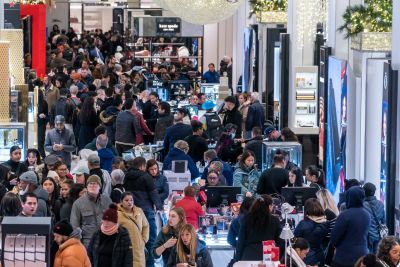
Peak season is worth a significant portion of annual revenue for UK retailers, often accounting for 30-40% of total sales and potentially up to half for some brands.
However, any disruption to supply chains, inventory management or deliveries during this period can have a disproportionately large impact on profitability and could make or break many retailers – especially during this year’s stagnant overall sales performance.
The forwarder says that for traditional retailers, the festive period brings a surge of inbound shipments and the constant pressure to keep shelves fully stocked. The stakes are even higher for online brands as delays in freight or last-mile delivery can result in out-of-stock products and lost sales, particularly as consumers increasingly expect same- or next-day service.
Retailers should be proactive and use technology to monitor shipments in real time, optimise route planning and maintain flexibility.
Vice president for commercial – Europe & North America, Umar Butt commented: “Traditionally, retail strategies focus on aligning orders with forecasted demand, but in recent years, things have been very different as planning ahead has been challenging. This year, with forecasts optimistically pointing to stronger growth during the Golden Quarter, the opportunity is certainly there for retailers to capture increased sales and market share, but only for those who plan proactively and remain agile.
“From our perspective the recurring theme moving forward is flexibility in terms of looking at how goods are sourced, imported, stored and distributed. Forecasting still of course forms a crucial component of a retailer’s end to end retail supply chain handbook, but it must now be coupled with scenario based contingency planning and multi-layered risk mitigation to ensure continuity of supply and meet consumer demand.
“Supply chains are now a lot more complex, and delays are less of a surprise and more of an expectation. Therefore, pre-booking dual ocean carriers with staggered ETAs to counter port congestion or utilising multimodal solutions such as combining sea and rail are essential strategies and have become standard practice. Consumer expectations are also higher and their buying habits are continually shifting, therefore some retailers have had to consider stretching out their seasonal promotions over a longer period to give consumers more time to shop, which means they have needed to maintain a steady flow of inventory over a longer timeframe, rather than relying on short, intensive bursts of stock movement around key dates. So, on the whole there’s a lot more to consider.”
He added that integrating technology such as real-time tracking systems that allows teams to monitor shipments across every stage of the supply chain is worth its weight in gold.
Butt added that last year, faced with cost pressures and ongoing uncertainty around lead times, many retailers resorted to reactive inventory strategies, resulting in either excess stock sitting idle in warehouses or shortages of key products on shelves.
Many then found themselves failing to meet demand during a crucial period or found themselves holding large volumes of unsold inventory, so storage and handling costs increased and they were left exposed to markdowns or write downs as goods eventually became obsolete or unsellable.
Butt continued: “We’re still seeing brands leaving their peak planning until the last minute, hoping capacity will be there or that demand will balance out. This of course comes at a risk as freight space tightens around October time, and the best slots disappear months earlier.
“Equally, due to the sheer influx of volumes arriving into ports or airports, congestion builds quickly. One late container can mean the difference between sales being made or empty shelves and/or stock for Black Friday and the pre-Christmas rush.
There are practical steps retailers can take to mitigate this if they work closely with their logistics provider to see what can be done relative to their requirements. For instance, even at this stage, prioritising critical shipments through pre-booked express lanes or premium air-freight options can help secure space before final cut-offs. But needless to say, the window to do so is rapidly closing and retailers must act immediately to ensure products arrive on time.”
Tags: Aramex