










Feature, Freight News, Sea
Trust status under review as Belfast unveils 25-year Masterplan
[ May 19, 2026 // Chris Lewis ]Belfast Harbour has published its 25 year Masterplan setting out £1.3bn of planned investment.
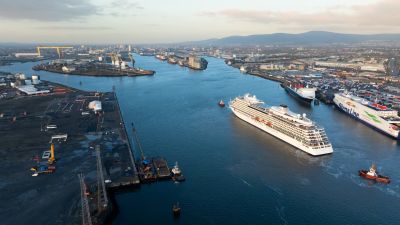
The Belfast Harbour 2025–2050 Masterplan: Horizons of Opportunity sets out how the Trust Port will expand and adapt to meet rising demand for trade and provide more capacity.
Masterplan projects include completion of the £90m D3 deepwater cruise terminal; Belfast’s first land reclamation project in 25 years to create a new freight terminal at West Bank Road; redevelopment of the island’s longest deep water quay – Stormont Wharf; a berth extension to its container terminal for next generation vessels; the first shore power for docked vessels; construction of a new logistics park and a clean energy hub; and a new maritime skills academy.
These plans would position Belfast Harbour as the principal maritime gateway on the Dublin–Belfast Economic Corridor, the report says.
The Masterplan also identifies housing and other real estate regeneration opportunities.
According to independent analysis by Ulster University and Grant Thornton, the investments set out in the Masterplan will underpin an increase in the economic output enabled by Belfast Harbour to approximately £12bn in Gross Value Added (GVA) annually from trade handled and support almost 5,500 construction jobs.
The plan’s authors say that there is clear evidence that capacity at ports along Ireland’s east coast will tighten over the next 20 years and, with a footprint of approximately 2,000 acres of land and 1,000 acres of water, and long term development potential, Belfast Harbour is uniquely positioned to respond, they say.
External forecasts prepared by port experts Haskoning indicate that trade volumes through Belfast Harbour could increase from around 24 million tonnes today to over 30 million tonnes by 2050 under steady growth, and to between 40 million and 50 million tonnes under higher growth scenarios. Under most scenarios, growth will outpace current infrastructure without planned investment.
Chair of Belfast Harbour Commissioners, Dr Theresa Donaldson, said: “Belfast Harbour has served the regional economy for nearly two centuries as a Trust Port – adapting, investing and growing as trade has evolved and the city around us has changed. The port is not simply a feature of Northern Ireland’s economy – it is a cornerstone of it.
“This Masterplan sets out a clear, long term vision for how Belfast Harbour will continue to deliver growth with purpose over the next 25 years.”
Chief Executive of Belfast Harbour, Joe O’Neill, added: “Belfast Harbour is a working port first and foremost. Much of what people and businesses across Northern Ireland depend on passes through here every day, from food and fuel to construction materials and consumer goods. Ensuring that trade continues to flow efficiently is our core purpose.
“As capacity tightens at key ports on the Irish east coast, we are putting the scale of our estate to work providing the planned capacity the island needs, supporting customers today and preparing Belfast Harbour to be the principal maritime gateway on the Dublin–Belfast Economic Corridor.”
Infrastructure Minister Liz Kimmins commented: “The 2025-2050 Masterplan captures a bold and exciting future for Belfast Harbour. I fully support this vision, which promises to significantly increase Belfast Harbour’s contribution to our economy and regional connectivity. My department is working hard to deliver the legislative changes required for Trust Port reclassification, providing the financial flexibility needed to bring these ambitious plans to life. I welcome this Masterplan as a constructive framework for future collaboration and a clear statement of ambition for the Harbour’s continued growth.”
Dr Donaldson added: “Delivering a plan of this scale requires true collaboration. We are committed to working with all our partners to navigate the strategic challenges that sit outside our direct control, as coordinated action will be essential to our collective success.
“For port projects, a key priority remains the reclassification of Belfast Harbour’s accounting status, which would allow us to borrow prudently to fund critical investment. Without this change, we can still deliver, but we will face harder choices regarding the pace and scope of our work. With it, we can go further and prepare for the scale of growth that both the economy and our customers require.”
Tags: Port of Belfast; AIdrivers