






Air, Express, Feature, Freight News
A weather eye keeps the supply chain moving
[ November 25, 2026 // Chris Lewis ]FedEx manager of Weather Services, Kory Gempler explains how In-house meteorological intelligence protects winter peak supply chains.
This winter, evolving weather patterns across Europe are reinforcing the importance of agility and preparedness throughout businesses’ supply chains. While a stronger El Niño effect and unusually warm ocean temperatures point toward generally milder, wetter conditions across much of the continent, the UK Met Office has warned that a weakening polar vortex could draw colder Arctic air southwards, increasing the chance of wintry spells across Northern Europe. Together, these shifting dynamics highlight the need for logistics networks to stay responsive.
While milder winters can reduce some traditional weather-related challenges, the potential for sudden cold snaps alongside periods of heavy rain, fog, and strong winds, means operators cannot simply prepare for a single, predictable winter baseline. Rapid changes in weather significantly influence transport reliability, delivery schedules, infrastructure, and inventory planning, meaning that building flexibility and contingency options into the supply chain is now more valuable than ever.
Adaptability is critical when wintry conditions reach regions unaccustomed to handling them. Many areas that rarely experience flash freezing or sudden heavy snowfall naturally lack specialised ground infrastructure, such as dedicated de-icing equipment or snow-clearing vehicles. Without those resources in place, even a brief cold spell can put unexpected pressure on local airports and road networks. By combining advanced forecasting with agile transport operations, businesses and logistics providers can be confident they are equipped to navigate potential shifts in the weather- maintaining visibility and keeping goods moving safely throughout the winter peak season.
The FedEx Meteorology team
To overcome these complex challenges, logistics providers need more than just standard public weather forecasts. This is exactly where the FedEx meteorology team comes in. Our 13-strong team operates 24 hours a day, 365 days a year. Established in 1986, it is one of the industry’s largest and most experienced cargo meteorology departments. For nearly 40 years, we have built a proven track record of safeguarding industry-critical freight and keeping our FedEx employees safe against extreme weather.
Our approach combines decades of meteorological expertise with real-time operational insight. We combine historical data from past El Niño years with live, present-day information to assess how weather conditions are likely to impact global supply chains and identify potential pressure points during peak season.
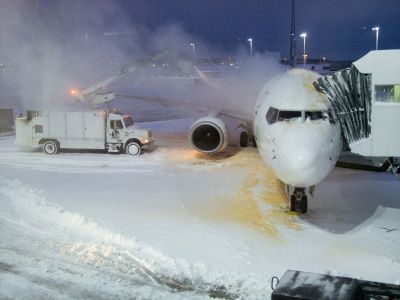
For instance, significant snow and ice accumulation require careful management in aviation because large aircraft must undergo mandatory, two-step de-icing procedures using heated water and thick glycol. This process can take up to 40 minutes per plane, which can increase aircraft turnaround times and requires careful operational planning. Furthermore, extreme crosswinds can force difficult landing manoeuvres, and dense fog can halt operations at smaller regional out-stations.
By identifying these severe weather threats days in advance, our meteorologists make proactive recommendations. We work closely with the Global Operations Center (GOC) and the European Network Operations Center (NOC) to execute emergency contingency plans. This allows us to assist in reroutes and coordinate freight movements between major network hubs, such as Paris Charles De Gaulle, Dublin, and Cologne, avoiding the worst of the weather altogether.
Why this is important
It is easy to think of the winter peak season purely in terms of seasonal holiday gifts and consumer deliveries. However, modern supply chains operate in incredibly small windows where even minor delays can cause widespread issues for high-value, time-critical cargo.
This is particularly urgent in healthcare and perishable logistics. Today, life-saving shipments like vaccines, advanced pharmaceuticals, and perishable medical supplies move across the globe in strictly temperature-controlled vehicles and packaging. The performance of this packaging is heavily influenced by external temperatures, and freezing can be just as damaging to medicines as excess heat. Rather than simply reacting when severe winter weather hits, proactive forecasting helps safeguard the integrity of these shipments from start to finish.
By pinpointing potential ice storms or through heavy snow predictions, our meteorologists give healthcare providers and perishable food shippers the insight needed to adjust dispatch schedules, reroute cargo, or temporarily hold shipments until conditions clear. This foresight ensures temperature-controlled packaging stays well within safe limits, helping time-critical medical and food supplies reach patients and customers in peak condition.
By accurately forecasting weather events and amending services up to 72 hours in advance, we prevent these disruptions. This deep foresight provides an important layer of confidence and assurance to our customers, helping them avoid dispatching valuable, sensitive shipments into severe weather conditions.
Ultimately, weather remains a primary consideration when it comes to managing global logistics. As weather patterns become increasingly variable, preparedness and adaptability are more important than ever.
By combining 40 years of in-house meteorological expertise with the operational agility of our vast European network, FedEx proves that true peak resilience is about much more than just delivering holiday parcels on time. It is about helping customers build resilient supply chains, keeping our frontline crew safe and supporting the continuity of critical, life-saving shipments around the world.
Pictures: Wikimedia Commons