










Feature, Freight News, Sea
Building maritime careers, not just filling vacancies
[ May 21, 2026 // Chris Lewis ]By Ocean Network Express
The maritime industry has a recruitment challenge … but not simply because young people are uninterested in shipping. In reality, many young professionals are looking for global careers with purpose, development opportunities and long-term potential.
The issue is that maritime has not always been successful at explaining what modern shipping careers look like, nor in equipping young people with the broad range of skills needed to thrive in an increasingly complex industry.
For an industry responsible for moving around 90% of global trade, that presents a significant long-term risk. The future of shipping will depend not only on attracting talent, but on developing people who can navigate a rapidly changing commercial, technological and environmental landscape.
That means the sector must think differently about recruitment and training; moving beyond narrow specialisation and towards broader, more rounded career development. Ocean Network Express (ONE) believes this approach is essential if the industry is to build a resilient workforce for the future.
ONE SAIL Programme (Shipping Apprenticeship & International Learning)
As one of the world’s largest container shipping companies, operating more than 280 vessels across 120 countries, ONE understands that shipping today requires far more than operational knowledge alone.
Modern maritime careers increasingly demand commercial awareness, cultural intelligence, digital capability, collaboration skills and adaptability alongside technical expertise.
That thinking sits behind ONE’s SAIL programme (Shipping Apprenticeship & International Learning) which was created to help develop the next generation of shore based shipping professionals through a more holistic model of learning and development.
Now entering its ninth intake since launching in 2019, the programme reflects a growing recognition across the industry that traditional recruitment pathways are no longer enough on their own.
Attracting Talent
The wider maritime sector has faced a number of challenges in attracting younger talent.
Industry feedback frequently highlights concerns around limited visibility of career progression, perceptions of outdated working practices, lack of diversity and difficulties engaging people with STEM and digital skills.
At the same time, expectations from younger generations are changing. Many are not necessarily looking for a single lifelong employer, but they are looking for organisations that invest in their development, offer meaningful experiences and provide future opportunities.
According to Janet van Heijningen, Talent & Succession Planning Manager at ONE and leader of the SAIL programme, this shift is increasingly visible in the candidates entering the industry.
She said: “The profiles we are seeing are changing. Young people today want to work for companies that offer strong development opportunities and future prospects.” Rather than training recruits for one narrowly defined role, the SAIL programme is designed to expose participants to the wider realities of the shipping business.
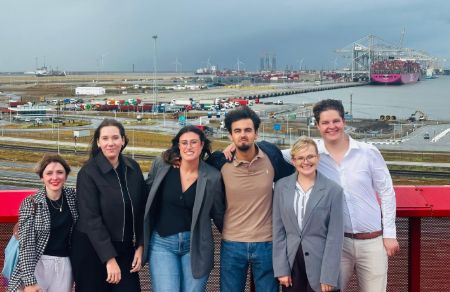
Over a two-year period, SAIL participants rotate through multiple departments including Customer Service, Sales, Operations, Finance and HR, gaining practical experience across the organisation. Alongside this, they undertake theoretical learning covering subjects such as international trade, vessel and cargo types, customs, project management, cultural awareness, presentation skills and remote collaboration.
The intention is not simply to create operational competence, but to build commercially aware, internationally minded professionals who understand how different parts of the shipping ecosystem connect together. That broader exposure matters because the maritime industry itself is evolving rapidly.
Adaptive skills
Digitalisation is reshaping customer expectations, operations and supply chain visibility. Sustainability requirements are changing how shipping companies think about fuel, efficiency and reporting. Global trade patterns continue to shift, while geopolitical uncertainty places greater emphasis on resilience and agility.
Future maritime professionals will need to be comfortable operating across all of these areas. ONE believes early career programmes therefore need to reflect the realities of modern business, not just traditional industry structures.
By rotating across departments and working on collaborative projects with colleagues across Europe and Africa, SAIL participants gain experience of international teamwork and exposure to the digital and sustainability developments taking place across the business. Some participants also spend time at ONE’s regional operations centre in Gdansk or at regional headquarters in London and Rotterdam.
Importantly, the programme also recognises that being “digital native” does not automatically mean young recruits are workplace-ready. She added: “There is often an assumption that younger generations will naturally adapt easily to business technologies. In reality, many still need support learning how to work effectively with business applications and organisational systems.”
That observation highlights a wider point for the maritime sector: attracting young people is only part of the challenge. Retaining and developing them requires structured support, mentoring and practical experience that helps bridge the gap between education and professional life.
The industry also has an opportunity to broaden its appeal by demonstrating that shipping careers are open to people from a wide range of backgrounds. Diversity remains an ongoing issue across many parts of maritime, yet programmes such as SAIL can help challenge outdated perceptions by focusing on potential, adaptability and merit.
To date, ONE says approximately 40% of SAIL participants have been female, with recruits coming from diverse backgrounds across the region. For the maritime industry as a whole, initiatives like these are unlikely to be a complete solution on their own. However, they do represent an important shift in thinking.
Shipping cannot assume future talent will simply arrive through traditional channels. The industry must actively demonstrate that it offers dynamic, internationally connected careers with room for growth, learning and progression.
That means investing in people earlier, developing wider skillsets and creating environments where young professionals can build meaningful long-term careers.
For ONE, the SAIL programme is one example of how the industry can begin responding to that challenge; not simply by recruiting young people, but by equipping them for the realities of modern maritime careers.
Find out more about SAIL here – https://eua.one-line.com/tab-page/career-webpage#sail-program
Tags: Ocean Network Express; ONE, SAIL