








Feature, Freight News, Rail, Sea
Gothenburg boxes head for record year
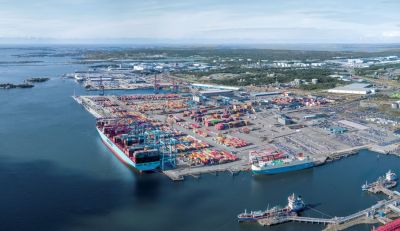
[ October 29, 2025 // Chris Lewis ]Sweden’s Port of Gothenburg says its container volumes rose by 4% in the first three quarters of 2025, reaching record levels both at the quayside and on the rail network. Ro ro traffic is also showing renewed growth after a slower period, though car and energy volumes have declined.
In total, 709,000TEU were handled during the first three quarters of 2025, putting the Nordic region’s largest port on track for an all-time high. The increase is driven primarily by imports, while exports remain stable. At the same time, the proportion of empty containers continues to decline – a reflection of balanced import and export flows.
Vice president sales, Claes Sundmark, declared: “It’s been a fantastic year so far, especially for container traffic. Several factors are working together. Cargo owners are increasingly demanding efficient, sustainable transport options that strengthen their competitiveness. Many other ports in northern Europe are currently struggling with capacity issues, which plays to our advantage. We have the service range, infrastructure, and skilled operators across all areas that allow us to meet demand.”
Gothenburg aims to move as much of its hinterland cargo as possible by rail and, during the first three quarters of 2025, the number of containers so transported increased by 4% to 393,000 TEU, again putting the port on pace for another record year. Growth is being driven by rail shuttles to and from northern Sweden, hinterland regions and the Stockholm region.
More than 60% of all container cargo to and from the port is transported by rail – also a record figure.
Meanwhile, 394,000 units of ro ro cargo were handled during the first three quarters, a 1% increase compared with the previous year. After a slower period in 2024, volumes are once again trending upward – particularly imports – while exports remain steady.
The port handled 172,000 cars during the period, a 9% decrease year-on-year. Exports to Europe fell 13%, while imports saw a modest rise. Exports to the US declined 21%, mainly due to import tariffs on cars from the EU.
Handling of energy products decreased 7% to 15.2 million tonnes though September saw a 22% increase in volumes, partly offsetting the decline earlier in the year.
Tags: Gothenburg